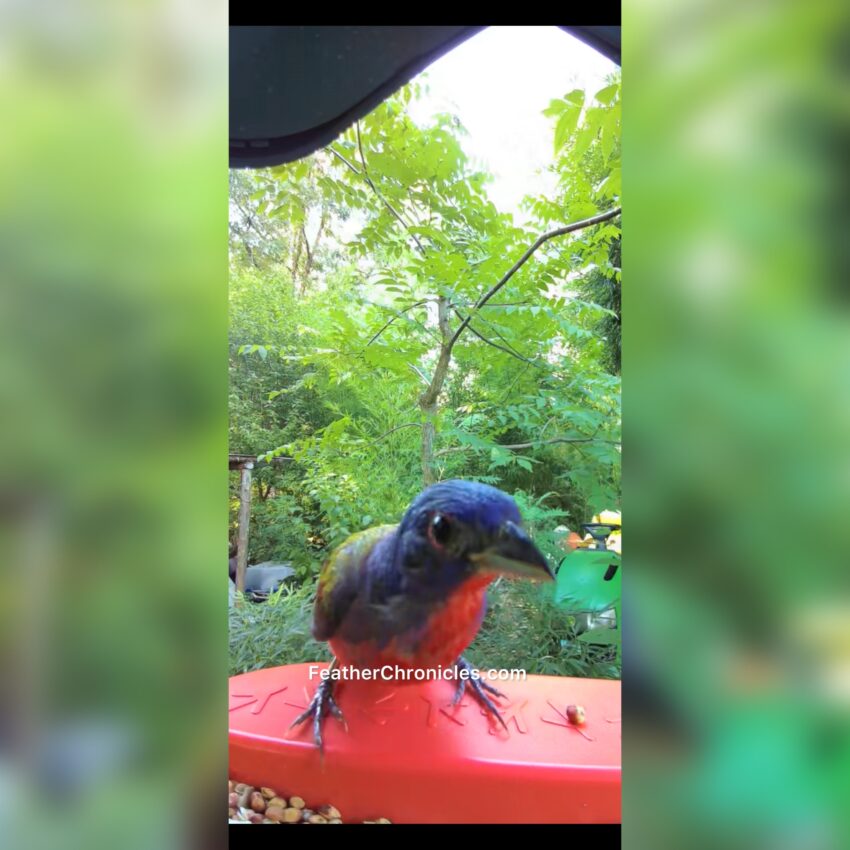
One glimpse of the Painted Bunting, scientifically known as Passerina ciris, is enough to make even the most seasoned birdwatchers stop in their tracks. This exquisite creature is often referred to as the “flying rainbow” due to the male’s mesmerizing combination of red, blue, and green plumage.
A compact bird, averaging around 5.5 inches in length, the male’s vibrant coloring is the product of an electric blue head, ruby red underparts, and a bright green back. On the other hand, females and juveniles sport a more muted, yet equally beautiful, greenish-yellow appearance, often blending seamlessly with their natural surroundings.
Native to North America, the Painted Bunting can primarily be found across the southeastern United States during the breeding season, favoring shrubby habitats, woodland clearings, and even suburban gardens. When winter arrives, many fly south, making their way to Central America or Florida to bask in warmer climes.
Their diet, varied and diverse, consists of seeds, berries, and small insects. This ensures they get a well-rounded nutrition that supports their vibrant colors and energy demands. Their song is just as delightful as their appearance—rich and melodious, it’s an aural treat for anyone fortunate enough to hear it.
Unfortunately, the Painted Bunting faces considerable threats, not just from habitat loss, but also from the illegal pet trade, captivated by its brilliant appearance. Thus, conservation efforts are pivotal to ensure that these avian jewels continue to grace our world with their presence.
Next time you’re in the field with binoculars in hand, keep an eye out for this kaleidoscopic beauty. The Painted Bunting is not just a sight to behold, but a testament to nature’s boundless creativity.