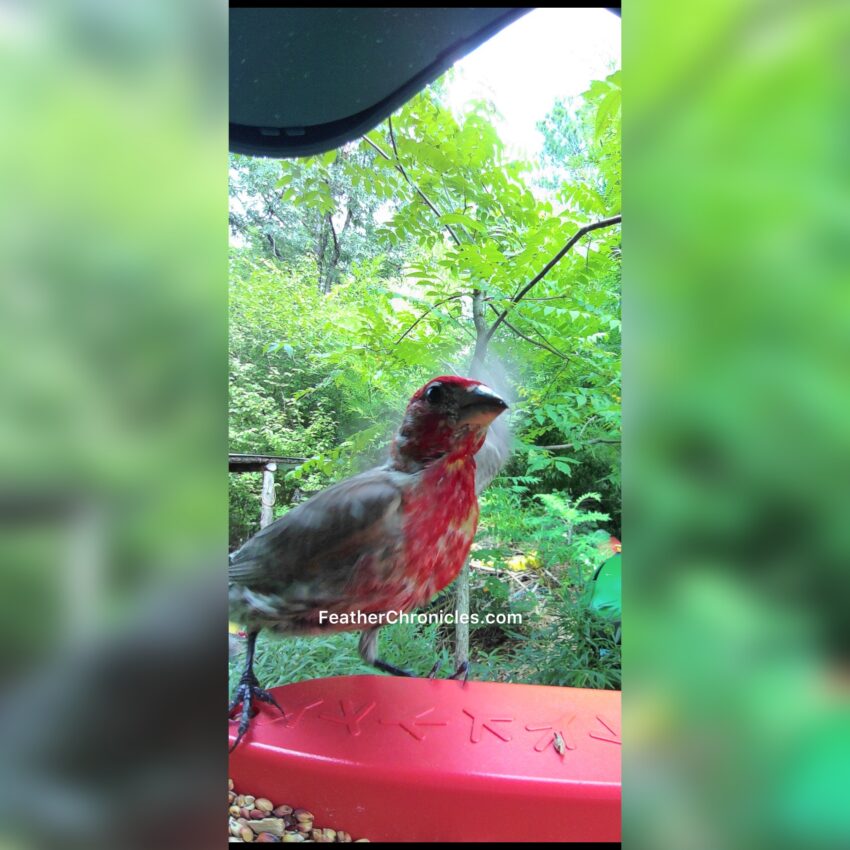
The House Finch, Haemorhous mexicanus, is a familiar sight to many North Americans, gracing bird feeders, city parks, and suburban backyards with its modest charm. With its vibrant chirps and sociable nature, this small songbird is a perfect introduction to the diverse avian life of North America.
Sporting a length of about 5 to 6 inches, the male House Finch is distinguished by its reddish chest, head, and rump. This rosy hue can vary in intensity, sometimes verging on orange or yellowish, depending on their diet. In contrast, females display more subdued brown and streaked patterns, lacking the vibrant coloration of their male counterparts.
Originally found primarily in the western parts of the U.S. and Mexico, the House Finch’s range expanded dramatically in the 20th century, now covering almost all of North America. This expansion can be attributed to their release in the eastern U.S., following illegal captivity.
House Finches are versatile eaters, predominantly feasting on seeds, grains, and berries. However, during breeding season, they won’t shy away from adding small insects to their menu, providing essential proteins to their offspring.
Their songs are as varied as they are delightful. Males serenade potential mates with a rapid, warbling song that changes and evolves throughout their lifetime, making each House Finch’s song distinct.
A word of caution to bird lovers: the House Finch, though commonly seen at feeders, is susceptible to a disease called mycoplasmal conjunctivitis. It causes swelling around the eyes and can lead to blindness. To prevent the spread of this illness, it’s essential to keep bird feeders clean and well-maintained.
In summary, the House Finch is a testament to nature’s adaptability and resilience. Its expanded range and familiar presence make it a delightful acquaintance for bird enthusiasts, both seasoned and new.